A Miel Impérial Selection
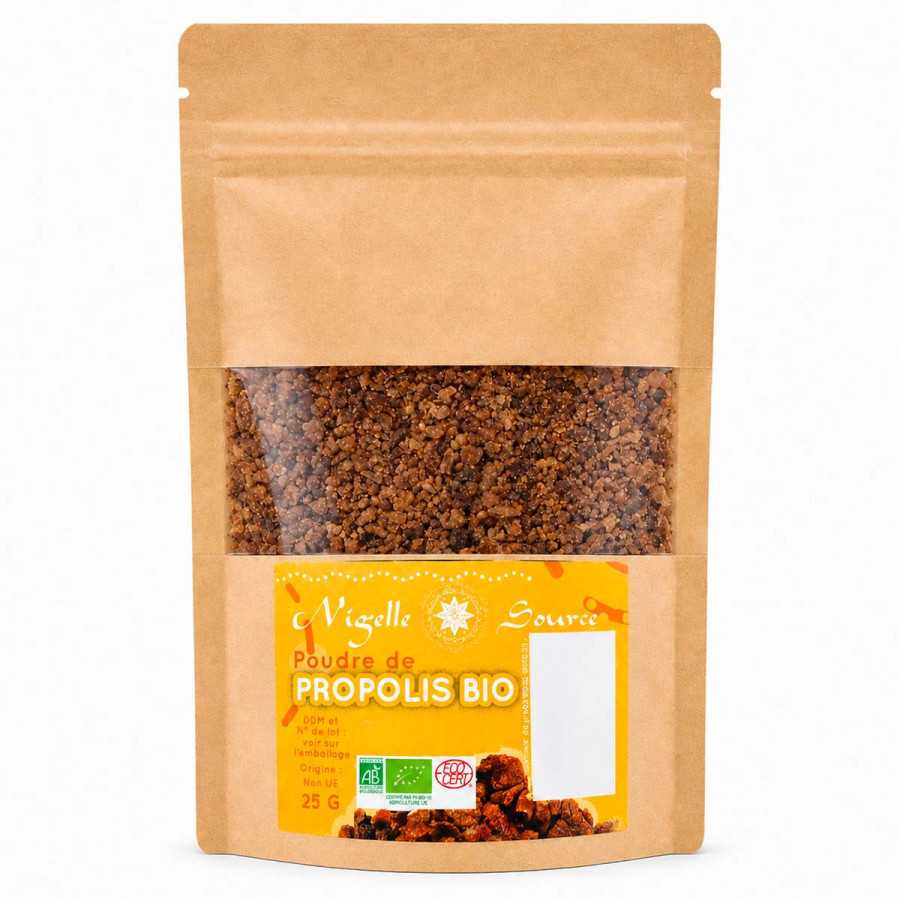
Organic Propolis Powder - 25 g
Propolis is probably the least known of the bee products. This resinous, gummy substance is gathered by bees from the buds and bark of certain trees, then reworked inside the hive. Miel Impérial offers it as a powder from organic farming, in a 25 g bag: the most versatile form, to be mixed with honey or added to your preparations.
Miel Impérial Organic Propolis: the powder in a 25 g bag
• Miel Impérial organic propolis is a propolis powder from organic farming, presented in a 25 g bag.
• Propolis is a resinous substance gathered by bees from tree buds and bark, then mixed with their secretions and with wax.
• Inside the hive, bees use it to seal cracks, narrow the entrance and keep their home clean.
• In powder form, it is traditionally mixed with honey, stirred into a lukewarm drink or sprinkled over a preparation.
• It is not recommended for people allergic to bee products, for pregnant or breastfeeding women, or for young children without medical advice.
Organic farming
certified organic
Bee product
gathered by the bees
Versatile
honey, drinks, preparations
What is propolis?
Bees gather plant resins from the buds and bark of certain trees, then bring them back to the hive where they mix them with wax and their own secretions. The result of that work is propolis.
Its name comes from the Greek: pro, in front of, and polis, the city. Literally, that which stands before the city. Bees indeed use it to seal cracks, narrow the hive entrance and keep the inside clean. It is the colony's building and protection material.
A material that has crossed the centuries
The Egyptians used propolis in the embalming process. The Greeks and Romans knew it well and gave it a place apart among natural substances. Over the centuries it also appears in a more unexpected field: varnish making, where it was valued for the sheen it gave to wood.
That is precisely why old varnish pots still carry motifs of bees or hives. A hive material that became a workshop material.
How to use propolis powder
Mixed with honey
The most natural pairing: two products from the same hive. Honey binds the powder and softens its resinous character. A pinch in a spoonful of honey.
In a lukewarm drink
Stir the powder into an infusion or warm milk, never boiling. Stir well: propolis does not dissolve completely, and that is normal.
Sprinkled
Over yoghurt, fromage blanc or stewed fruit, for a resinous, woody note that is pleasantly surprising.
The taste
Propolis has a pronounced, resinous and slightly acrid taste that leaves nobody indifferent. Start with small amounts while you get used to it.
Why choose organic propolis?
Bees gather resins from the trees around them: the quality of propolis therefore depends directly on the environment of the apiary. Propolis from organic farming guarantees that this harvesting setting meets the label's specifications. It is the only truly verifiable piece of information for this type of product.
Brown, green or red: the types of propolis
The colour of propolis depends directly on the resins the bees found around the apiary. Several types are traditionally distinguished according to the flora foraged and the production region.
Brown propolis, the most common in Europe, comes mainly from poplar buds. Green propolis is associated with Brazil and a local plant, Baccharis. Red propolis, rarer, comes from the mangrove areas of South America. Each has its own shade, smell and intensity.
The different forms of propolis
Raw propolis
Pieces of resin just as the beekeeper scrapes them from the frames and supers. The form closest to the hive, but also the hardest to dose and work with.
The powder
Finely ground propolis, like this one. It is the most versatile form: it mixes into honey, blends into preparations and is dosed by the pinch.
Extract and tincture
Propolis macerated in a solvent, usually alcohol, to obtain a concentrated liquid. A widespread but processed form.
Gums, sprays and capsules
Ready-to-use presentations, practical but further removed from the raw material.
What propolis contains
Propolis is not a uniform material: its composition varies with the flora, the season and the region. It mainly contains plant resins and balsams, bee wax, volatile essential oils, a little pollen and a fraction of aromatic compounds, including flavonoids.
This variability explains why no two propolis samples are quite alike, and why geographical origin matters as much as the form.
The other bee products
Propolis pairs naturally with honey. Discover our selection of honeys from around the world to build your own combinations.
Precautions
• Allergy to bee products: do not consume this product if you have a known allergy to honey, pollen, propolis or bee stings.
• First intake: start with a very small amount to check your tolerance.
• Not recommended for pregnant or breastfeeding women or for young children without medical advice.
• If you are on any medical treatment, ask your doctor or pharmacist for advice.
• Do not exceed the daily dose stated on the label. This product replaces neither a varied, balanced diet, nor medical treatment, nor the advice of a healthcare professional.
Storage
Keep the bag tightly closed, at room temperature, away from light, heat and humidity. Propolis powder tends to clump with moisture: keep it thoroughly dry. Keep out of reach of young children.
FAQ - Organic propolis powder
What exactly is propolis?
It is a resinous substance that bees make from resins gathered on tree buds and bark, mixed with wax and their secretions. They use it to seal and clean the hive.
Where does the word propolis come from?
From the Greek pro (in front of) and polis (the city): literally, that which stands before the city. A reference to how bees use it to protect and narrow the hive entrance.
What does propolis taste like?
A pronounced, resinous and slightly acrid taste, quite far from the sweetness of honey. That is precisely why it is traditionally mixed with honey.
How do you take propolis powder?
Mixed with honey, stirred into a lukewarm drink, or sprinkled over yoghurt or stewed fruit. Avoid boiling liquids.
Does propolis dissolve in water?
No, not completely: it is a resinous material and stays partly in suspension. A deposit at the bottom of the glass is normal and indicates no defect.
What does organic propolis mean?
That the propolis comes from organic farming, which governs the apiary's environment and beekeeping practices according to the label's specifications.
Who should avoid propolis?
People allergic to bee products. Pregnant and breastfeeding women as well as young children should seek a doctor's advice beforehand.
What is the difference between raw propolis and propolis powder?
Raw propolis is the resin as scraped from the frames by the beekeeper, in irregular pieces. The powder is that same resin finely ground: it is easier to dose and blends better into preparations.
What are green propolis and red propolis?
They are types of propolis defined by the flora foraged. Green is associated with Brazil and the Baccharis plant, red with the mangrove areas of South America. Brown propolis, notably from poplar buds, is the most common in Europe.
What is propolis made of?
Mainly plant resins and balsams, beeswax, volatile essential oils, a little pollen and aromatic compounds including flavonoids. Its composition varies with the flora, the season and the region of the apiary.
The hive's protective material
Organic propolis powder · 25 g bag · from organic farming. A Miel Impérial selection.