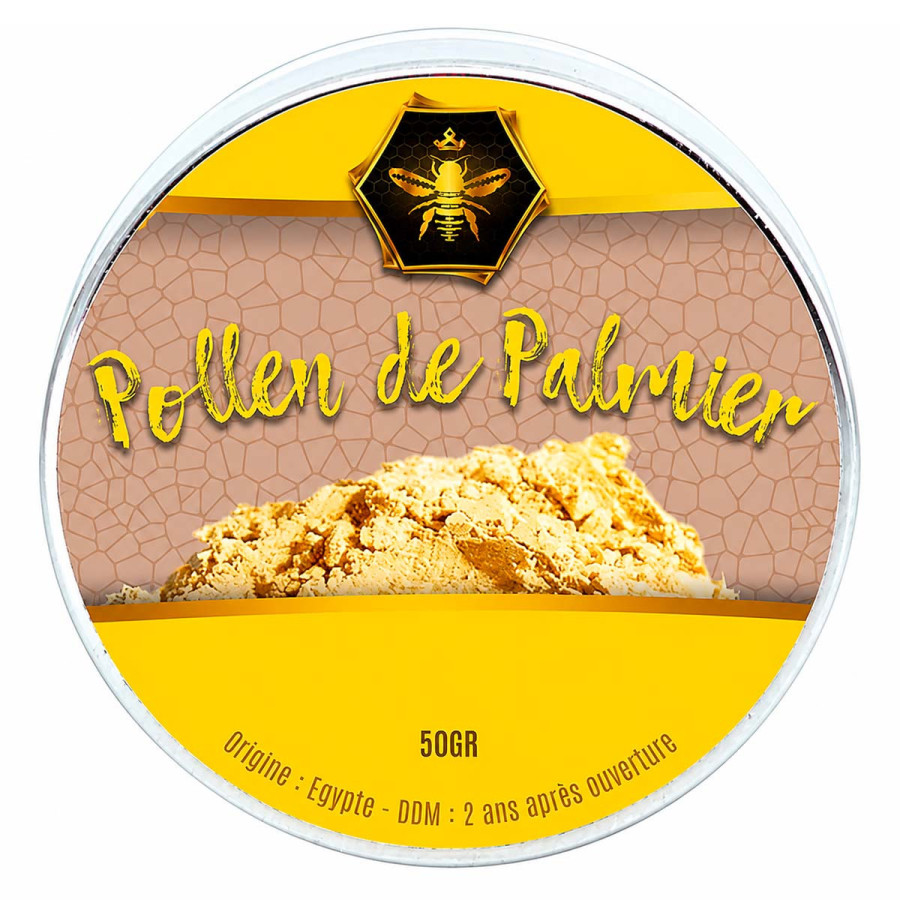
A Miel Impérial Selection
Date Palm Pollen - 50 g or 100 g, Origin Egypt
Palm pollen, or date palm pollen, is the male pollen of Phoenix dactylifera. Harvested only once a year, directly from the tree and by hand, with no chemical treatment, it comes as a fine powder of a pale yellow tending towards beige. Available in a 50 g or 100 g jar, origin Egypt, to be kept refrigerated.
Miel Impérial Palm Pollen: the powder from Egypt in 50 g and 100 g
• Miel Impérial palm pollen is the pollen of the date palm (Phoenix dactylifera), offered as a powder in a 50 g or 100 g jar.
• Its origin is Egypt and its best-before date is 2 years after opening.
• It is harvested only once a year, directly from the tree, by hand and without chemical treatment.
• Its powder is highly volatile: it is traditionally mixed with honey, royal jelly or dates to make it easier to take.
• It is not recommended for people allergic to pollen, asthmatics, or those prone to allergic rhinitis or conjunctivitis.
50 g or 100 g
two jar sizes
Origin Egypt
stated on the jar
Annual harvest
only once a year
No treatment
hand-harvested from the tree
What is palm pollen?
In the date palm, male and female trees are separate. The pollen is produced by the inflorescences of the male trees, and it is this pollen that fertilises the female trees, the ones that will bear dates. In palm groves this pollination is often carried out by hand by farmers, a practice passed down since Antiquity.
It is this pollen, harvested and then dried, that is offered here as a powder. Its colour ranges from yellow to pale beige, and its smell is very distinctive, recognisable and quite volatile. Tradition holds that a paler pollen is a sign of better quality.
A rare product, one harvest a year
Palm pollen is available only once a year, when the male trees flower. This single window, combined with an entirely manual harvest from the tree, explains the small quantities placed on the market and the relative rarity of the product.
Our pollen is harvested by hand, directly from the tree, with no chemical treatment of any kind. Its origin, Egypt, is stated on the jar.
How to take palm pollen
Mixed with honey
This is the traditional and most practical method. Honey binds the powder, stops it from flying off and softens its taste. Half a teaspoon of pollen in a spoonful of honey.
With royal jelly
Another classic pairing among bee products, for those who already use it.
With dates
A return to the source: the pollen of the palm with the fruit of the palm. Stuff a pitted date with a little pollen mixed with honey.
Mind the draught
The pollen is extremely volatile. Open the jar away from draughts, close it again immediately, and always pour the powder onto a surface before mixing.
Powder or capsules?
The powder allows free dosing and lets you make your own blends with honey, royal jelly or dates. Its drawback is precisely its volatility, which calls for a little method. Capsules solve that point and travel anywhere, at the cost of a fixed dose. On the powder side, two formats are available: the 50 g jar to discover it, and the 100 g jar, better value per gram, for regular users.
Precautions
• Allergies: not recommended for people allergic to pollen, asthmatics, or those prone to allergic rhinitis or conjunctivitis. If in doubt, seek your doctor's advice before consuming it.
• First intake: start with a very small amount to check your tolerance.
• If you are on medical treatment or have a hormone-dependent condition, seek your doctor's advice before consuming it.
• Not recommended for pregnant or breastfeeding women without medical advice, nor for young children.
• This product is a food supplement. It replaces neither a varied, balanced diet, nor medical treatment, nor the advice of a healthcare professional.
Storage
Palm pollen should be kept refrigerated, in its tightly closed jar and away from sunlight. That is the condition for preserving its quality over time. The stated best-before date is 2 years after opening. Keep out of reach of young children.
FAQ - Palm pollen
What is date palm pollen?
It is the pollen produced by the inflorescences of the male date palm (Phoenix dactylifera). Harvested and then dried, it comes as a fine powder of a pale yellow tending towards beige.
Why is palm pollen rare?
Because it is harvested only once a year, when the male trees flower, and that harvest is done by hand directly from the tree. Available quantities therefore remain limited.
How do you take palm pollen?
Traditionally mixed with honey, royal jelly, or stuffed into a date. Mixing it with something sweet is above all practical: it stops the highly volatile powder from flying away.
How do you recognise good quality palm pollen?
Tradition takes colour as the first marker: the paler the pollen, the better its quality. Origin, harvesting method and the absence of chemical treatment matter just as much.
How should palm pollen be stored?
In the fridge, jar tightly closed and away from sunlight. That is what best preserves its quality over the months.
Powder or capsules: which form to choose?
The powder allows free dosing and your own blends, but calls for method because of its volatility. Capsules are simpler to carry and to dose, with a fixed amount.
Who should avoid palm pollen?
People allergic to pollen, asthmatics and those prone to allergic rhinitis or conjunctivitis. If you are on medical treatment, seek your doctor's advice.
Date palm pollen, one harvest a year
Palm pollen · 50 g or 100 g jar · origin Egypt · hand-harvested. A Miel Impérial selection.