


Bees in danger: multiple causes, catastrophic consequences!
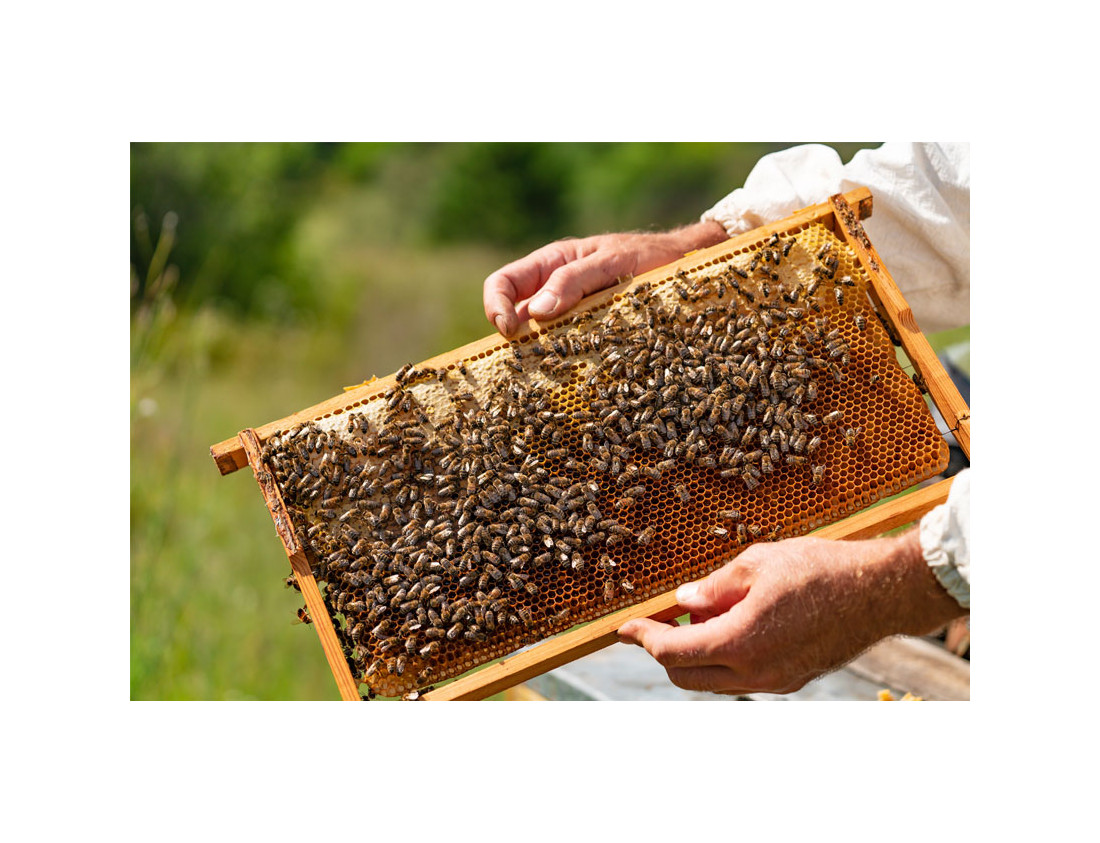
The disappearance of bees, which help to pollinate wild and cultivated plants, is a calamity without a name, which could cause the disappearance of the human race !
Let us quote you some figures:
- Over 70% of the world's food production depends on pollinating insects (bees, butterflies, wasps, bumblebees, etc.),
- Between 60 and 80% of wild plants require the help of pollinating insects to reproduce, which creates a virtuous circle, as bees, for example, have a diet entirely dependent on flowers (nectar, pollen, honey) and in return, plants reproduce thanks to their help - a bit like a circular economy in a nutshell,
- Over 200 billion dollars is the estimated value of the service provided by pollinators. For example, in China, where insecticides exterminated foragers, Chinese farmers pollinated apple trees by hand, which requires a certain agility and industrial quantities of time... "If they were to disappear, mankind would have a lot to worry about...
1) A little history...
The honey bee has been evolving ever since it first appeared several million years ago - the first bee is thought to be 100 million years old!
Originally, rather than nectar and pollen, she made her honey from other insects !
No historian can pinpoint exactly when she became a vegetarian, but if you think about it, between tasting a fly or enjoying the delicious sweet nectar of an orange blossom tree, the choice is quick, isn't it? !
Closer to home, there are over 20,000 different species of bee, including around 2,000 in Europe and almost 1,000 in France, spread across the globe.
They come in all colors, sizes and types, from 3 cm long bees to dwarf bees measuring barely 2 mm.
The honey bee is just one species among many, as some bees are solitary, do not live in colonies, and others even live in underground burrows.
2) The indispensable role of bees
As mentioned above, many plant species are directly dependent on pollination, with honeybees making an important contribution to this balance.
In urban environments, the same species of plant is often far apart, so bees play a crucial role in bringing pollen from a male flower to the female flower of the same species.
What's more, they are one of the cornerstones of the environment, since by being a pillar of plant pollination, they enable the survival, evolution and reproduction of many plant species, which means that, despite their great age, bees are still precious allies to be cared for.
3) The causes of bee extinction
Unfortunately, and this would have been "desirable", there is not one cause, but several, and this is a dangerous cocktail; Indeed, if each cause is already a big problem, if the causes interact, or clash, or complement each other, you potentially have a catastrophe looming on the horizon.
4) Different causes
Several factors are responsible for the extinction of bees: habitat deterioration, a diet tainted by pesticides, climate change, the presence of predators due to globalization...
Add to this the promotion of monoculture and chemical inputs, and phytosanitary treatments, and the fact that bees are still around is a priceless blessing that few people recognize.
It's important to know that to be in excellent shape, and have a healthy immune system, the bee needs access to quality food that changes with the seasons. When the swarm lives in a diversified environment, offering nectar and pollen from trees, shrubs, wild plants and cultivated plants alike, the bee is in its element, happy and flourishing.
However, the last few decades have seen the appearance of pesticides, chemical inputs, the promotion of monoculture, and typically the scourge of our century, phytosanitary treatments...
Conventional farmers, unaware of organic farming, have huge crops stretching as far as the eye can see, and with productivity pushed to the limit, farmers counter the invasion of plant or animal species with massive inputs of synthetic chemicals such as pesticides (which include herbicides, fungicides and insecticides).
Applied to agricultural fields to eradicate doglit, insecticides unfortunately don't discriminate, exterminating all living things.
As for those who escape this massacre, insecticides cause behavioral or physiological disturbances, interfering, for example, with their sense of orientation, memory and ability to communicate.
In some cases, they can even lead directly to their death. In recent years, beekeepers have often found hundreds of colonies empty, as bees lose their sense of direction, are unable to return home and die isolated.
France is no exception, as globalized trade has become commonplace: we import, we export. However, when we import goods from all over the world, sometimes inconvenient guests find their way onto cargo ships, as in the case of the infamous "varroa" or "varroa destructor".
Varroa destructor, a small red spider native to Southeast Asia, is currently considered one of the main causes of bee colony mortality worldwide.
Unfortunately, Varroa is not the only parasite to come from other lands: the small hive beetle from South Africa and the Asian hornet, which is currently invading Europe, are also causing considerable damage to colonies.
Last but not least, microbiological attacks also travel and are increasingly frequent, given the proximity of apiaries belonging to different beekeepers, and the transhumance of beekeepers.
Transhumance is when beekeepers move all their hives, at the request of farmers for example, or people with orchards, in order to pollinate crops. But this weakens the swarms, as the journeys are very hard on them.
All these hostile factors - lack of food, parasites, pesticides - weaken the bees' immune system, making it even more difficult for them to defend themselves against predators.
5) Case studies
Speaking above of interacting causes, the typical example is monoculture, coupled with phytosanitary treatments. Let's illustrate this with a practical case.
To make intensive farming possible, hedges, trees and wild flowers are eliminated, the aim being to create huge agricultural areas, where a single type of plant is cultivated, resulting in increased yields and exponential productivity - so much for that !
However, this has unfortunate consequences, and it's not really worth the effort: it impoverishes the soil, leading to an exponential dose of fertilizers, and fertilizers mean phytosanitary products, which will finish off the bees.
Imagine eating peas all year round, a single dish, every day, all the time... you'd be green, wouldn't you?
In this case study, you can see 2 distinct causes which, taken together, have a devastating effect, causing the disappearance of insects which do so much to help us, and for which we are hardly grateful.
6) How can we save our precious friends ?
How can we save the bees? The ideal, and hopefully not wishful thinking, is a bit of the famous "c'était mieux avant" (it was better before) ...
Far from being backward-looking, or nostalgic for an idealized era, it's true that old methods sometimes have their merits, such as returning to a gentler form of agriculture, banishing monoculture, and realizing that the stakes are immense, and time very short...
It's worth repeating and repeating, like an incessant leitmotiv, the bee is an indispensable link in ecosystems! Protecting bees means protecting us, avoiding the nightmare of irreversible ecocide.
To achieve this, we need to switch from intensive chemical use to an organic farming system, which will be beneficial for everyone: farmers, pollinators and our food security.
The recent boom in organic farming and the growing application of techniques that reduce or eliminate the use of chemical pesticides, such as Integrated Pest Management (IPM) and permaculture, show that pesticide-free agriculture is possible, economically profitable and environmentally safe.
7) Conclusion
"This is the first time in our planet's history that the extent of human activity has encroached so much on the natural system. And it's the first time that human civilization is at risk of collapse. We may disappear because of the bees."
For a change, we'll conclude with a quote from Paul Ehrlich, an eminent biologist and lecturer at Stanford University.
Let's hope that our children and grandchildren will have the joy of seeing bees foraging, and of tasting honey, imperial honey, a honey that respects bees, beekeepers and the environment.