


Light or dark honey | taste, colour and uses
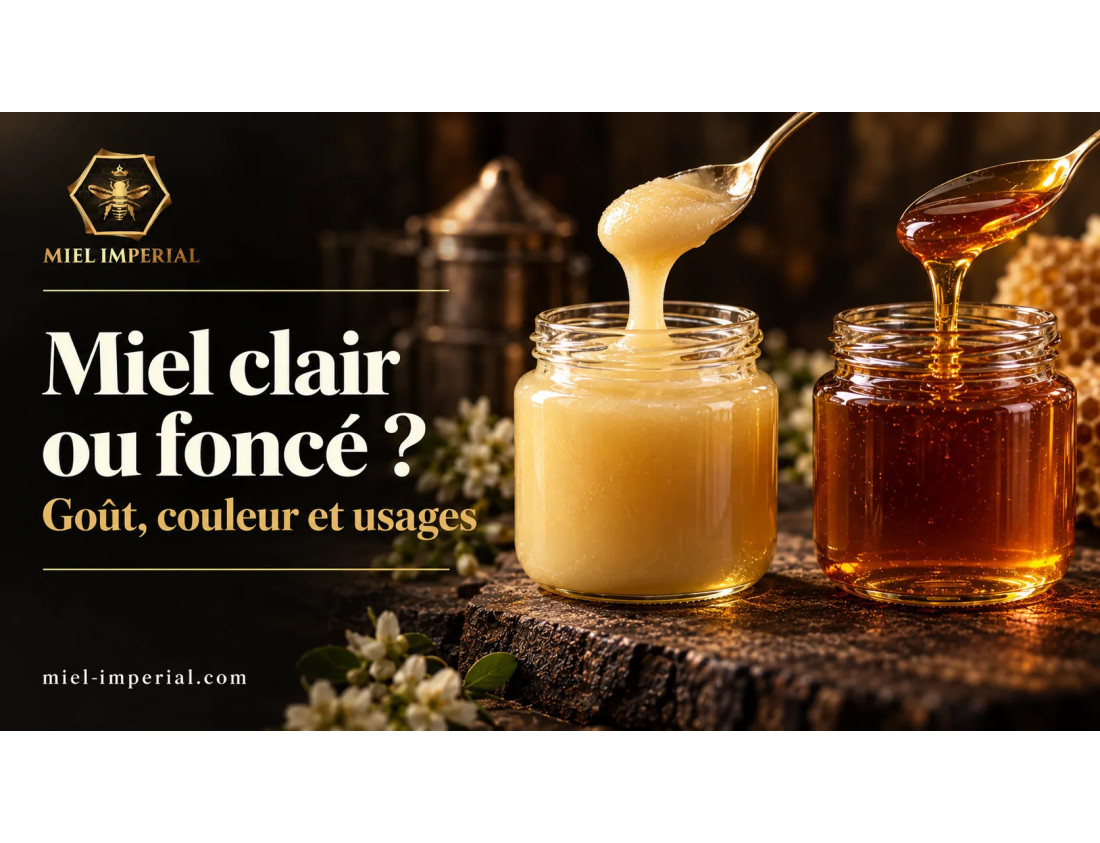
Ivory, golden or brown honey invites comparison. Colour gives a first visual impression, but cannot by itself predict taste, texture or quality. Here is how to choose according to what you enjoy eating.
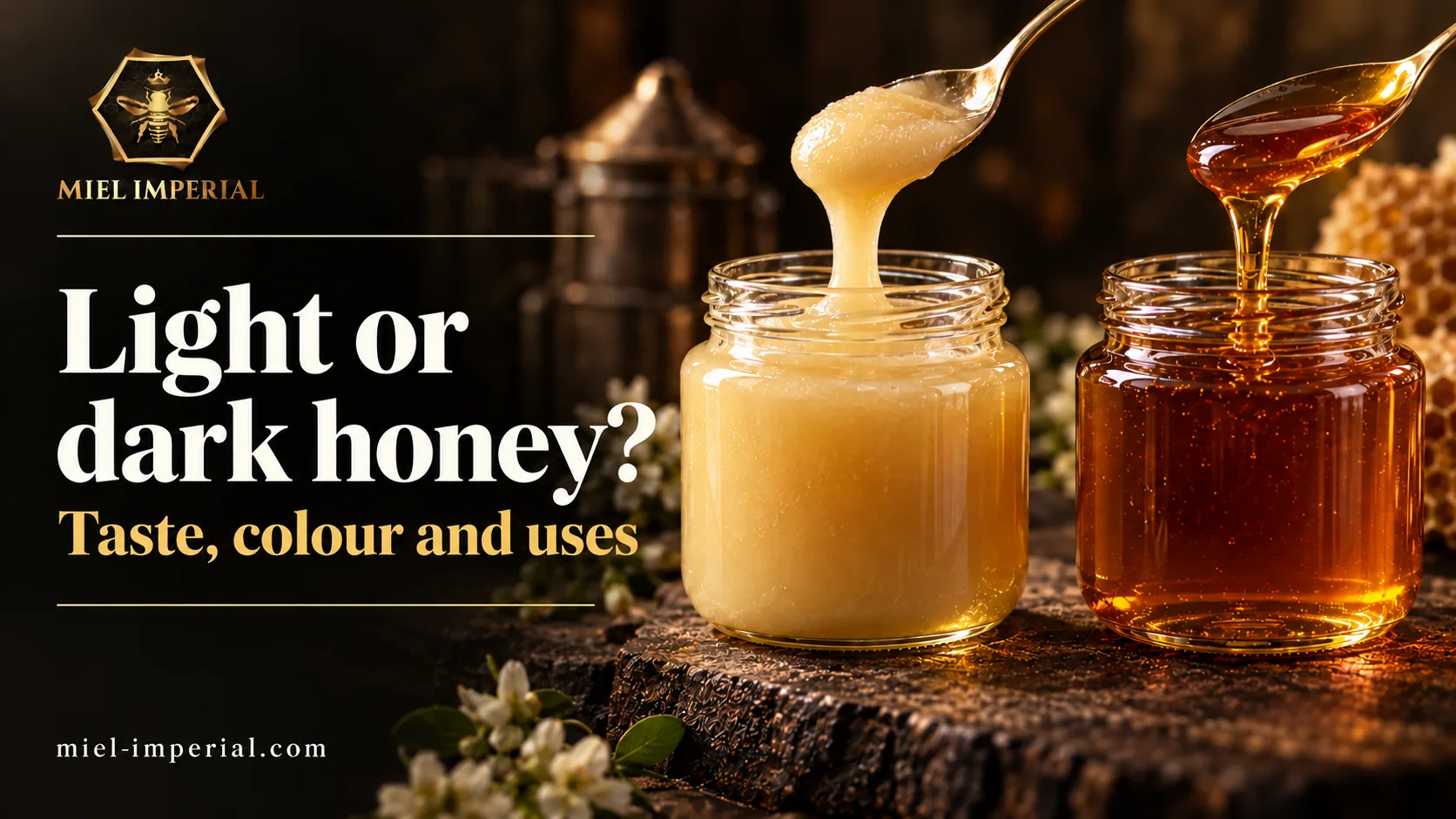
Ivory, golden or brown honey invites comparison. Colour gives a first visual impression, but cannot by itself predict taste, texture or quality. Here is how to choose according to what you enjoy eating.
Where do colour differences come from?
Botanical origin contributes to honey’s range of shades. Crystallisation also changes appearance: the same honey can look lighter and more opaque as it crystallises. Distinguish its colour from its liquid or crystallised state.
Does light always mean mild?
Light honeys are often associated with delicate flavours, but this is not a fixed rule. A pale honey may have pronounced aromas. Use the flavour description and your own preferences as guides.
Does dark always mean strong?
Some dark honeys offer woody, malty or caramel notes. Others have a different balance. Floral origin, harvest and tasting are more informative than a classification based only on colour.
Texture is a separate criterion
Light honey may be liquid or creamy; dark honey can also crystallise. For toast, an easy-to-spread consistency is practical. For a sauce, fluid honey mixes quickly. Choose according to your cooking needs.
Choose for the pairing
With plain yoghurt, pick sweetness or aromas you enjoy. With cheese, look for a contrast you like. When baking, consider the flavour you want to add. You can compare two small tastings on the same food.
Colour does not rank quality
Dark honey is not automatically better than light honey. All honeys remain mainly composed of sugars. Stated origin, labelling and traceability are more useful than promises attached to a shade. Colour alone cannot prove authenticity or nutritional superiority.
Frequently asked questions
Is white honey always creamy?
No. Its presentation depends in part on crystallisation. Read the texture description of the jar you are considering.
Can colour identify fake honey?
No. Appearance alone is insufficient. Labelling, traceability and, where necessary, appropriate analyses are more relevant.
Taste a creamy white honey
Discover our white honey from Kyrgyzstan as an example of pale honey with a creamy texture. Sizes and availability are shown on its product page.