


Crystallized honey: what to do | Miel Impérial
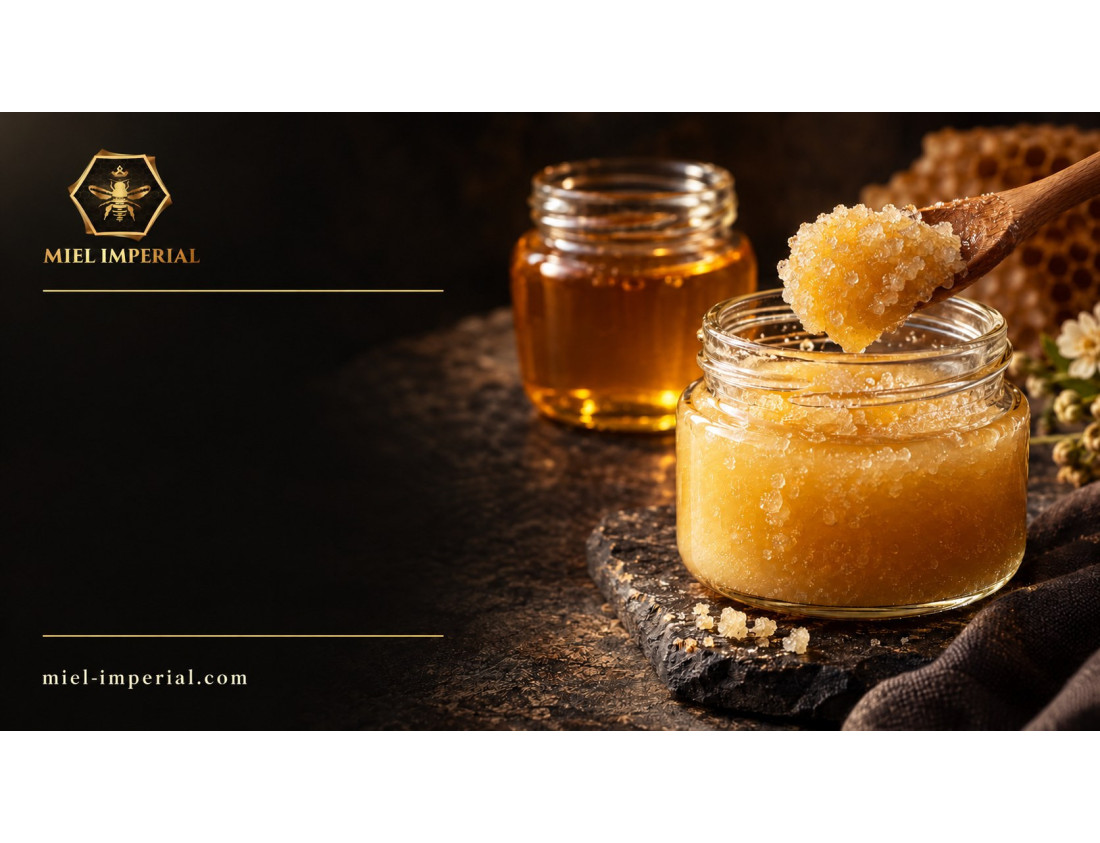
Find out why honey crystallizes, how to enjoy it or soften it gently in warm water, and how to choose a texture that suits your taste.
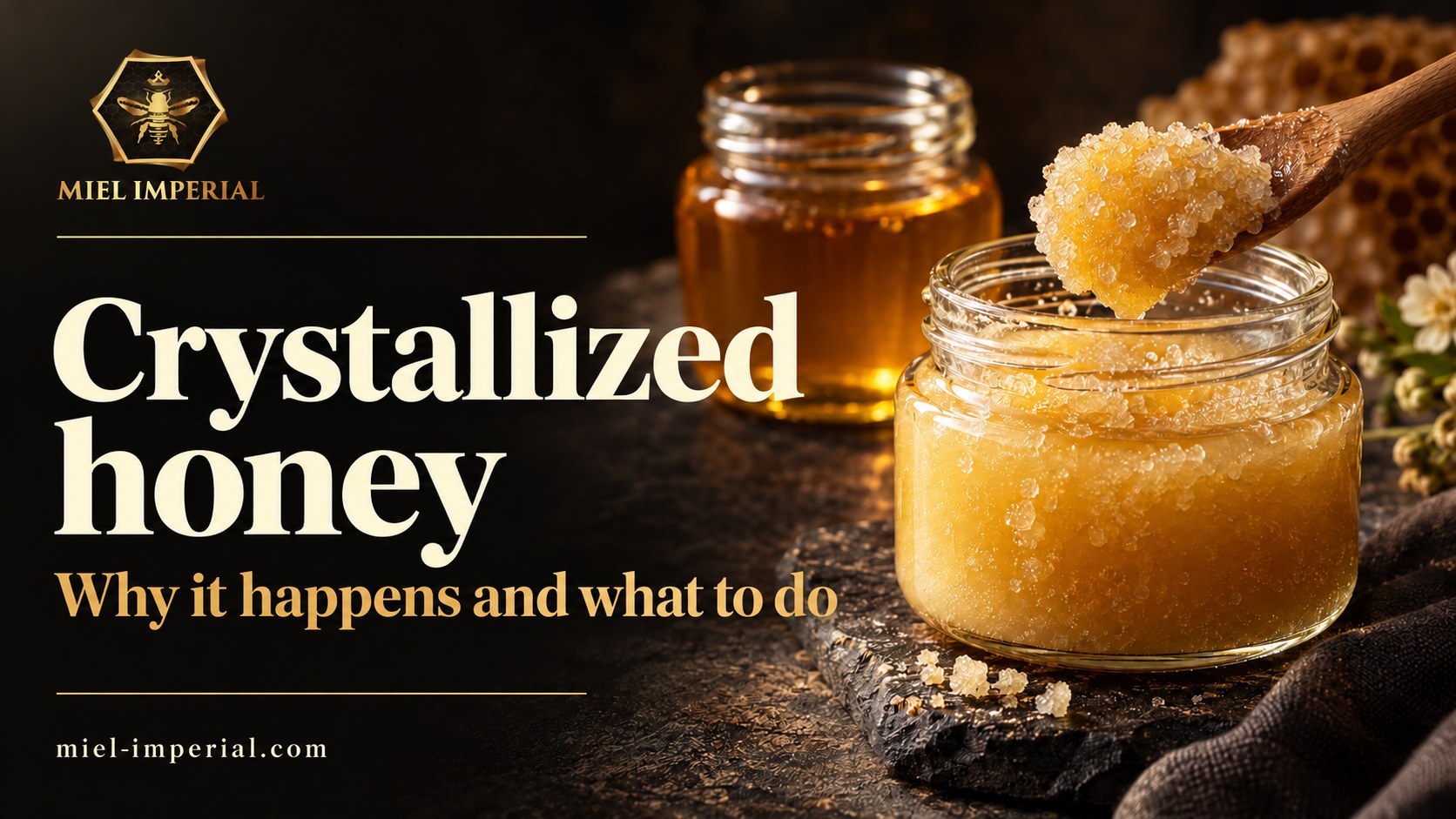
THE MIEL IMPÉRIAL GUIDE · Updated on 9 October 2026
Has your honey become thick, grainy or almost solid? This change in texture is common. Crystallization is the formation of glucose crystals within honey. On its own, it neither means the honey has spoiled nor proves its purity. Here are the essentials to help you understand your jar and decide what to do.
Has your honey crystallized? Three essentials
- You can enjoy it as it is if there are no signs of spoilage.
- To soften it, use a gentle, gradual warm-water bath.
- Texture alone cannot establish whether honey is authentic.
In this guide
Why does honey crystallize?
Honey contains glucose, fructose and water, among other components. Some of the glucose can form crystals, making the honey thicker, more opaque or firmer. Its composition varies with the nectar collected and the batch. Two jars can therefore develop differently even when their floral origins are similar.
Temperature and tiny particles, such as pollen grains or existing crystals, also influence the process. A cool room can encourage many honeys to set. Crystallization speed is not a quality ranking: both liquid and creamy honey can offer an enjoyable tasting experience.
Can you eat crystallized honey?
Yes, crystallization alone does not make honey unsuitable to eat. Spread it on toast, spoon it into yoghurt or let it dissolve in a recipe. You do not need to restore a liquid texture to enjoy it.
Separate texture from spoilage
A grainy texture is not the same as fermentation. However, an unusual smell, persistent bubbling with gas production or mould are reasons not to consume the product and to contact the seller. Adding water to the jar is not a solution.
How can you make crystallized honey more liquid?
If you prefer honey that pours more easily, work slowly. The aim is to soften it without strongly heating the entire jar.
- Use a glass container suitable for warm water. If the packaging is unsuitable for heating, transfer only the portion you need to an appropriate container.
- Place the container in a water bath at around 35 to 40 °C, away from direct heat. Keep the water below the opening so none gets into the honey.
- Stir gently with a clean, dry spoon. Replace cooled water with warm water, without using boiling water.
- Stop when the texture suits you. The time depends on the amount and crystal size. The honey may crystallize again later.
What to avoid
Avoid direct flames, microwaves, boiling water and repeatedly heating the whole jar. Excessive heat can change the colour and aromas. Taking a small portion is often more practical than liquefying the entire contents.
How should you store honey?
- Keep the jar tightly closed in a dry place away from direct sunlight.
- Choose a reasonably stable room temperature, away from radiators and cooking hobs.
- Always use a clean, dry spoon: moisture introduced into the jar can affect storage quality.
- Follow the label instructions. A jar of honey generally does not need refrigeration.
Liquid, creamy or grainy: which texture should you choose?
| Texture | What you notice | Ways to enjoy it |
|---|---|---|
| Liquid | The honey pours easily. | Drizzle over yoghurt, add to a sauce or spread on toast. |
| Creamy | Fine crystals create a soft texture. | Toast, pancakes and tasting by the spoonful. |
| Grainy or firm | The crystals are more noticeable. | Enjoy as it is or gently soften it. |
Creamy honey can result from fine crystallization, either natural or controlled. Its consistency does not necessarily mean an ingredient has been added. Check the label to see what your jar contains.
Choose your honey at Miel Impérial
Choose a flavour profile and a use first, then check the texture described on the product page. Consistency can change over time and with storage conditions. No variety guarantees permanent fluidity.
White honey from Kyrgyzstan
A variety to explore if you enjoy creamy textures and honey on toast. Check the product page for the pack size and product details.
View the honeySidr Malaki honey from Yemen
Another origin to explore for a different tasting experience. Check the product page for the aromatic profile, pack size, provenance and price.
View the honeyFrequently asked questions about crystallized honey
Why is my honey turning white?
Crystal formation can make honey more opaque and lighter in colour. Colour alone does not establish its quality or origin.
Is honey that stays liquid fake?
No. Some honeys naturally remain fluid for longer. Crystallization, or its absence, is not a purity test.
Does a water bath prevent further crystallization?
No. Softening honey does not permanently change its composition. Crystals can form again.
Can I add water to dilute my honey?
Avoid adding water to a jar you intend to store. For a recipe, take a portion and mix it separately.
Should I throw away honey that has become hard?
Hardness alone is not a reason to discard it. Check its condition, smell, label instructions and storage conditions.
Choose a texture, discover an origin
Creamy for spreading or more fluid for pouring: explore the selection and choose to suit your taste.
Explore our honey selectionSources and background
The explanations about composition, crystallization and storage draw on FAO publications about honey. Descriptions of the commercial varieties come from their product pages.
FAO · Value-added products from beekeeping · Honey
FAO · Beekeeping and sustainable livelihoods · Honey