

Honey and hives: natural solutions to relieve symptoms
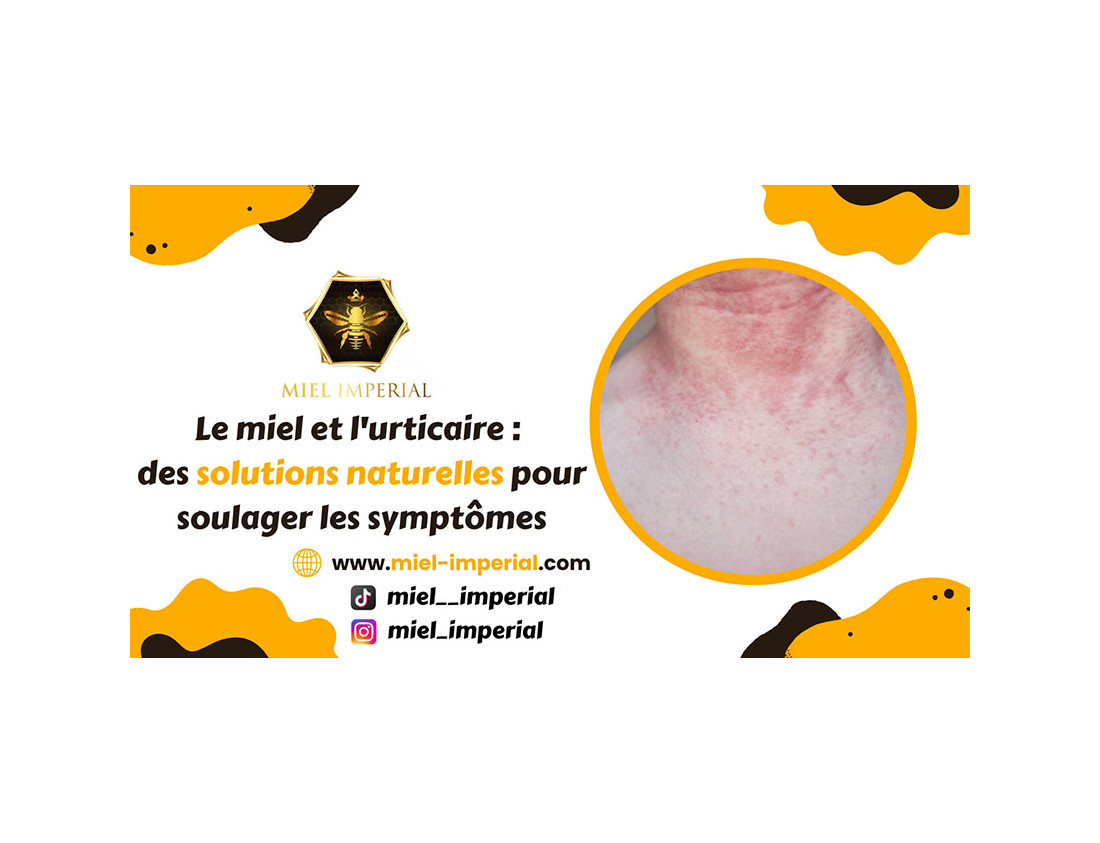
Hives are a common skin condition in which the skin becomes itchy, red and swollen. It can be caused by a variety of factors, including food allergies, medication or stress. Honey is one of the natural remedies often recommended to relieve the symptoms of hives. In this article, we'll explore the benefits of honey in treating urticaria and how to make it part of your daily routine.
The anti-allergic properties of honey
Several studies have shown that honey has anti-allergic properties that can help prevent and relieve allergic reactions such as hives, contact dermatitis and allergic rhinitis. These properties are due to the natural components present in honey, in particular pollen proteins and enzymes.
Pollen proteins
Pollen is a major allergen present in the air and responsible for many allergic reactions. Honey contains small quantities of pollen proteins, which can lead to regular and progressive exposure to these allergens when honey is consumed. This can help the immune system to better tolerate these allergens and reduce the risk of allergic reactions such as hives.
Enzymes
The enzymes present in honey, notably glucose oxidase and catalase, also have anti-allergic properties. These enzymes are capable of breaking down allergens and preventing them from attaching to immune cells, which can reduce the onset of allergic reactions such as hives.
Honey: a natural anti-inflammatory for hives
Honey is also known for its anti-inflammatory properties, making it an effective remedy for relieving the symptoms of hives. Inflammation of the skin is one of the main factors responsible for the swelling, redness and itching associated with this skin condition. By reducing inflammation, honey helps to relieve these symptoms and improve skin comfort.
Phenolic acid and flavonoids
The active ingredients in honey with anti-inflammatory properties are mainly phenolic acid and flavonoids. These substances act by inhibiting the production of pro-inflammatory mediators and stimulating the release of anti-inflammatory molecules, which helps to reduce the skin inflammation associated with urticaria.
How can you incorporate honey into your daily routine to combat hives?
To reap the benefits of honey for hives, you can incorporate it into your diet or apply it to the skin. Here are a few suggestions:
- Eat honey regularly : adding a teaspoon of raw, unfiltered honey to your tea, yoghurt or smoothie helps to ingest pollen proteins and enzymes that are beneficial in preventing allergic reactions.
- Apply honey to affected areas : spread a thin layer of honey over hives to take advantage of its anti-inflammatory and anti-allergic properties. Leave on for around 20 minutes before rinsing off with lukewarm water.
- Make a honey mask : mix two tablespoons of honey with one tablespoon of sweet almond oil and apply this mixture to the areas affected by hives. Leave on for 20 minutes before rinsing off.
Nevertheless, it is essential to consult a doctor or allergist in the event of persistent or severe urticaria in order to determine the exact cause and establish a suitable treatment. Honey can be an effective supplement, but does not replace appropriate medical treatment.
Precautions when using honey for hives
While honey is generally well tolerated and safe for most people suffering from urticaria, certain precautions should be taken:
- Allergy to honey : it is essential to check that you are not allergic to honey before using it as a treatment for hives. In the event of an allergic reaction after consumption or application to the skin, discontinue use immediately and consult a health professional.
- Raw, unfiltered honey : to reap the benefits of honey for hives, we recommend using raw, unfiltered honey, as it retains more of its anti-allergic and anti-inflammatory properties than processed or pasteurised honey.
- Children : honey is not recommended for children under one year of age due to the risk of infantile botulism. Always consult a paediatrician before using natural remedies for hives in young children.
In conclusion, honey is an interesting natural solution to help prevent and relieve the symptoms of urticaria thanks to its anti-allergic and anti-inflammatory properties. It can be eaten regularly or applied directly to the skin to reap its benefits. However, it is important to take precautions when using it and to consult a health professional if in doubt or if you have an allergic reaction.
In Same Category
- How to Care for Your Skin from Within with Natural Active Ingredients?
- Honey pastries and the importance of choosing the right mold
- National plan to combat the Asian hornet: challenges, measures and stakeholders involved
- Dattes Ajwa : recettes simples sucrées et salées
- Huile de nigelle & miel de nigelle : synergies ou redondances ?