

Focus on the wasp's nest
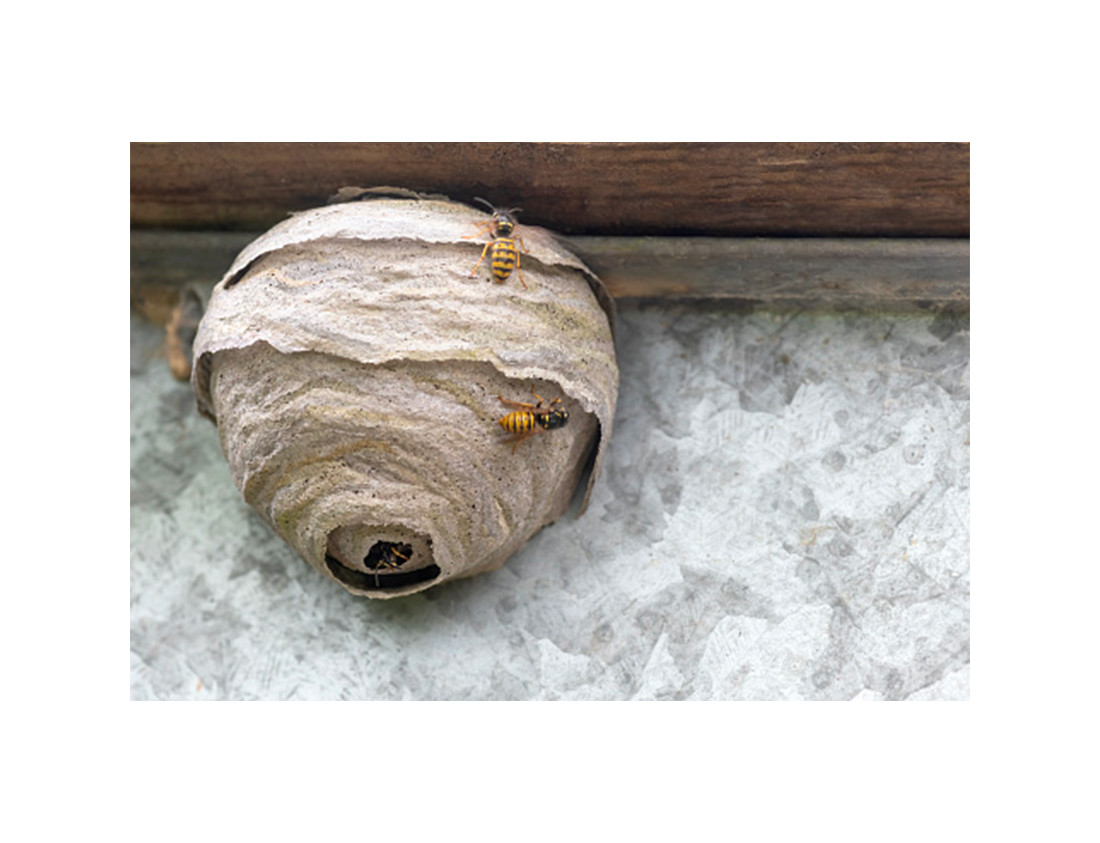
Have you noticed a huge nest in your garden or elsewhere? And all those little creatures circling around it? No, they're not! It's not bees that have come to offer you their tasty honey, but wasps that have taken up residence in your home! When it comes to honey, we'll point you in the direction of the best bee nectars, but let's get back to our other little beasts... And we'll explain right away how, when and why to destroy a threatening wasp nest!
Find out more about wasps...
Wasps are hymenopteran insects. And among wasps, only the females possess a venomous sting.
So, in contrast to solitary wasps, only social wasps set about building the nest for their annual colony.
After being fertilized in spring, the queens are the first to occupy their carefully constructed nests. Nests in which they establish their colony by depositing their larvae.
Worker wasps then chew wood, mixing it with their saliva to produce a kind of paper pulp similar to cardboard. This pulp is then used to form the cells in which the larvae live.
It's worth noting that wasps set up their nest just about anywhere. Roofs, chimneys and garages can all be places where they build their nests. But even more unlikely places can become home to these dear little insects, such as mailboxes!
This can quickly become a living hell for people who see wasps coming and going as if on a catwalk! Especially as wasps are formidable stingers!
In fact, unlike bees, wasps can sting several times in a row, since they don't lose their sting on the first sting!
They therefore represent a real danger to both humans and animals!
What to do about a wasp nest
Now that you've realized that it wasn't bees, and that the little beasts haven't come to do you any favors... Well, you're going to have to assess the risks and take the necessary measures for your own safety and that of others. And let's not forget your little fur balls(dogs and cats), who run a greater risk of being stung! Children, too, are at greater risk!
Wasps are a major nuisance:
- Stings can cause edema which, depending on their location (in the neck, for example), can result in fatal suffocation.
- Allergic reactions(anaphylactic shock) can also be very serious and even fatal in some people.
- There is also a risk of food spoilage and pollution. There's also a risk of food spoilage and pollution, as well as a disruption to the quality of life that can lead to a veritable phobia of insect proliferation.
So, if you or those around you are allergic to the stings of hymenoptera, you should definitely consider destroying your wasp nest.
How do I neutralize a wasp nest?
- First of all, it's best to take action at the end of the day, when there's less activity around the wasp nest. And ideally during the cold season.
- Then, if the bee-eater is small, you can act on your own, equipped of course to cover your entire body. Then use a suitable insecticide , following the instructions on the label.
- On the other hand, if your beehive is large, or if you're allergic to bites, you'll need to call in a professional. To avoid any risk to yourself.
For your own safety, don't act during the day or when it's hot.
Also, don't disturb or excite wasps by hitting their nest with a stick, for example, or shining a flashlight in their face.
Finally, keep calm and act gently so as not to upset the little beasts!
Is it safe to leave a wasp nest?
Leaving a wasp's nest in a busy area exposes you to many risks. However, if the nest is far from living quarters, there's no need to destroy it.
Wasps never spend more than a year in the same nest. Each winter, they leave the nest. And from one season to the next, colonies disappear and abandon their nest.
Who to call?
The best thing to do when faced with a wasp nest is to call a pest control expert , who will be trained and qualified for this type of intervention. He or she will know best how to deal with the problem, using the right products and equipment to avoid taking any risks.
Rates for wasp nest removal generally range from 80 to 150 euros.
Once again, there's no point in harming these little creatures by destroying their nest. Especially if they are located in a place that poses no risk to people or animals.
What's more, wasps play an important role in the ecosystem, eliminating harmful insects such as mosquitoes and insects that attack crops.
They also contribute to pollination. Wasps are therefore a useful part of nature, and should be preserved as much as possible. If our dear little beasts are not a threat, don't neutralize their colony. Instead, let them live in peace... They'll naturally disappear on their own the following year.
Tasty honey from our bee friends!
To make up for the frustration of not being able to enjoy the good honey of these little beasts that have come to invade you, we recommend our best bee nectars!
First of all, discover Sidr Malaki honey from Yemen, considered one of the best honeys in the world! This is a rare and highly sought-after honey from the jujube tree. Renowned for its irresistible taste, it is nonetheless a source of immense benefits!
Finally, surprise your taste buds with Yemeni euphorbia honey. This surprising nectar from a cactus plant is sure to add a slight spiciness to your dishes! It also has numerous therapeutic virtues. For example, it helps soothe respiratory problems such as asthma and allergic asthma.
Bees are cooler, aren't they?
In Same Category
- Moroccan Breakfast: Everything You Need to Know About the Authentic Beldi Breakfast
- Comment bien choisir son fournisseur de miel premium pour revente ou boutique
- E-commerce trends for beekeeping products in 2026: what to sell and how to stand out
- Le rôle des abeilles dans les régions du Yémen, de Russie et du Kirghizistan : défis et protections
- Miel en infusion : comment l’associer à des plantes pour un bien-être optimal