


The Kenyan hive: an ecological alternative for modern beekeeping
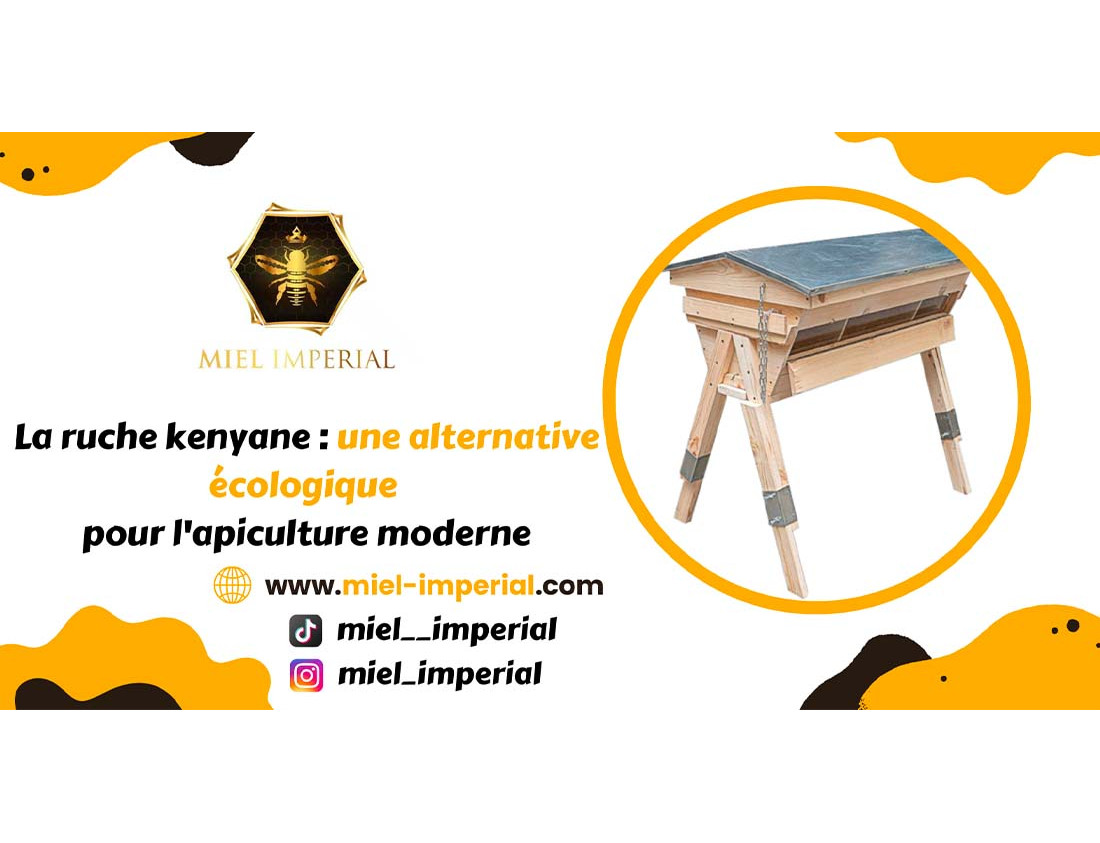
Designed in the 60s by Dr. Maurice V. Smith, a British beekeeper living in Kenya, the Kenyan hive has become a popular option for beekeepers looking to adopt more sustainable, environmentally-friendly beekeeping methods. While enabling efficient honey production, this hive design also offers considerable benefits for the health and well-being of bees.
Features of the Kenyan hive
Derived from traditional African hives, the Kenyan hive is long and horizontal, unlike the classic vertical hives used in Europe and North America. They are generally built using local, natural materials such as wood or terracotta, thus reducing their environmental impact.
Here are some of the main features of the Kenyan hive:
- Horizontal shape: unlike vertical hives, the top bars are arranged horizontally and can be easily lifted without disturbing the rest of the colony.
- Frameless top bars: bees build their own comb according to their needs and natural organization.
- Side entrances: bees enter and exit through holes in the sides of the hive, reducing the risk of robbing.
- Bee-friendly space: the open side of the hive gives bees free access to the entire volume, promoting the natural organization of their habitat.
Ecological and economic benefits
There are a number of reasons for choosing to switch from a traditional hive to a Kenyan hive:
- Simplicity and accessibility
Simplified manufacture and use, using local and renewable materials. Building a Kenyan hive requires no specialized skills or expensive equipment.
- Respect for the environment
Producing honey in a horizontal hive helps preserve local ecosystems, by encouraging bees to build their combs naturally rather than using industrially-produced wax.
- Higher yield
Studies have shown that the Kenyan hive produces 20% to 50% more honey than conventional hives.
Gradual adoption by beekeepers
Beekeepers around the world are beginning to adopt the Kenyan hive for its ecological and economic benefits. In France, the Association des Apiculteurs Kenyanistes de France (AAKF) is promoting this hive model to local beekeepers.
The transition to a horizontal hive can be facilitated by training courses offered by various beekeepers' associations, which teach the specific techniques required to maintain and harvest honey in a Kenyan hive.
Some beekeeping enthusiasts also opt to maintain a mix of vertical and horizontal hives, to take advantage of the benefits of both systems and diversify their honey production.
Limits and challenges
Despite its many advantages, the use of the Kenyan hive also has a number of drawbacks:
Climate adaptation
The open design of the Kenyan hive can make the colony more vulnerable to climate change and extreme temperatures. Beekeepers must therefore take care to adapt the location and exposure of their hives to the region where they are located.
European standards
Kenyan hives are generally built without any space dedicated exclusively to pollen storage, and often fail to meet European beekeeping standards. Bringing them up to standard may require special fittings, which can be a hindrance for some beekeepers.
Bee resistance
On the other hand, bees kept in a Kenyan hive can develop greater resistance to disease and parasites, reducing the need to use chemicals and contributing to the sustainability of beekeeping.
The Kenyan hive is an interesting alternative for beekeepers wishing to adopt ecological and sustainable practices. While enabling efficient honey production, its adoption nevertheless requires adaptation to local climatic constraints and compliance with current regulatory standards.
In Same Category
- How to Care for Your Skin from Within with Natural Active Ingredients?
- Honey pastries and the importance of choosing the right mold
- National plan to combat the Asian hornet: challenges, measures and stakeholders involved
- Dattes Ajwa : recettes simples sucrées et salées
- Huile de nigelle & miel de nigelle : synergies ou redondances ?
Comments
No comment at this time!
Leave your comment