


How is honey made?
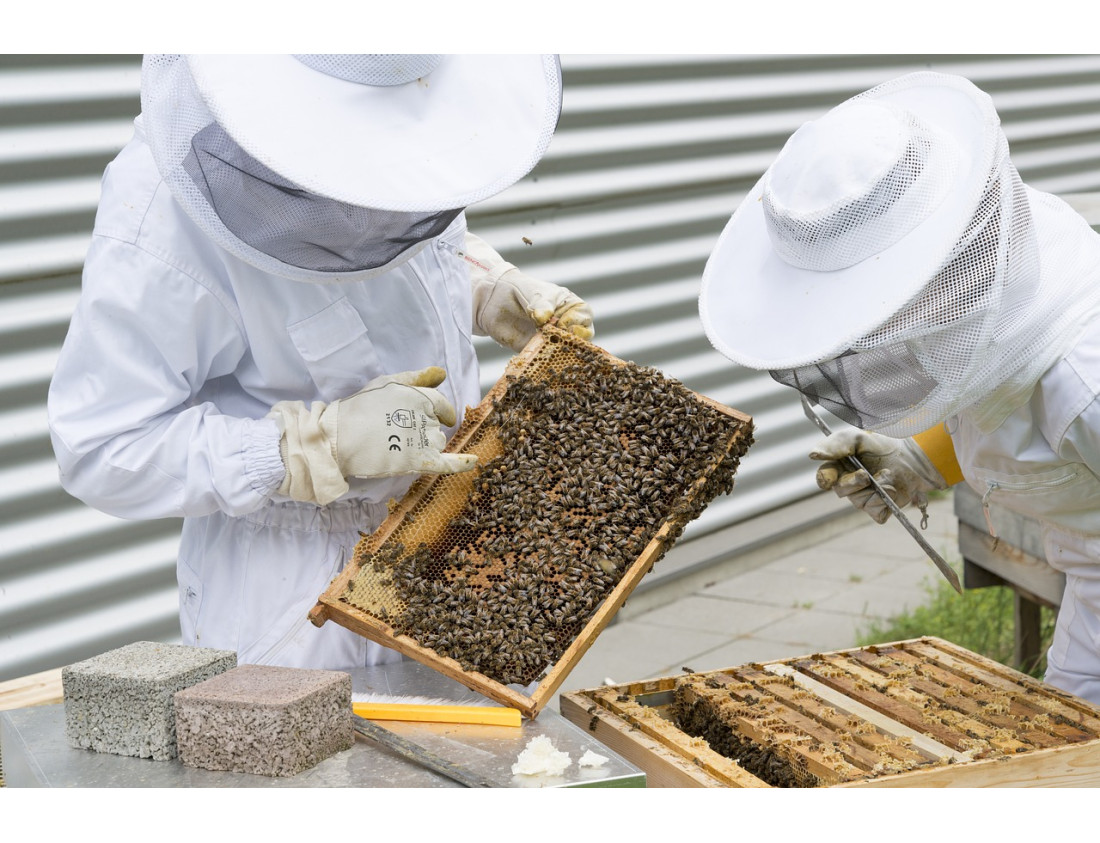
There are all kinds of honey: blossom honey, chestnut honey, jujube honey, mountain honey, thyme honey and many others, from all corners of the world, except from the coldest regions.
Honey is consumed and tasted in all parts of the world, but once you've had your fill of it, do you know how this delicious nectar, which has delighted so many taste buds for millennia, is produced, this precious liquid so useful to bees and humans alike?
It all starts with the beehive!
A beehive is made up of honeycombs, which the bees build from wax in around 3 to 4 days.
To produce wax, bees have wax glands under their abdomen.
When the bee reaches 15 days of age, glands develop, enabling them to produce wax.
The bees knead the wax into small slabs, which they then agglomerate to build the comb.
In the case of a domestic hive, comb is often prefabricated with wax.
Indeed, when making swarms or producing honey, a beekeeper will often use frames with sheets of embossed wax from natural wax, melted and then laminated to give a new sheet of wax.
This is because the bees would otherwise eat a considerable quantity of honey in order to produce natural wax, thereby reducing profitability for both amateur and professional beekeepers.
Hive organization
Generally speaking, whether natural or not, all combs are organized in the same way:
In the center, there's the brood, which is the "nursery": it forms a kind of ball nestled in the heart of the combs so as to be protected from the cold.
This is where the larvae (future bees) will grow and transform.
They are well cared for and pampered, as the larder containing pollen and nectar reserves is close to them, from producer to consumer!
It's worth pointing out that all the cells in the hive are hexagonal in shape (6 sides), the ideal structure for containing a maximum amount of honey.
These cells are less than 1 mm thick, so their thinness in no way prevents them from being very sturdy! In fact, one comb can hold up to 2kg of honey!
Strength in numbers
Bees live in society, and their survival depends on their extraordinary cohesion and fraternity.
First of all, there are the workers, who are the most numerous. They're all females - there are tens of thousands of them - and they do all the work.
Then there are the males, also known as "drones", who are slightly larger than the workers, but much less numerous - there are only a few hundred, or just under 2% of the hive.
They have no stinger and their only role is to fertilize the queens.
Finally, there's the queen be e: the largest of all bees, she gives birth to all the bees in the hive.
She never leaves the hive except for her mating flight, and spends her time laying eggs (up to 2,000 a day in summer).
The cycle from egg to bee
3 days after being laid by the queen, the egg hatches and a larva emerges.
The larva is fed royal jelly by the nurse bees for around ten days, allowing it to swell considerably and metamorphose into a pupa.
The cell is then sealed with wax, and the nymph stops feeding until it becomes a bee.
Finally, the wax seal is broken by the bee itself, allowing it to leave its cell and join the other bees.
A wide variety of jobs
Over the course of its existence, a bee often changes role:
- Builders: they make wax;
- Foragers: leave the hive to collect nectar and pollen;
- Storekeepers: they collect the nectar brought back by the foragers, and store it in the honeycomb to make honey.
The stages in honey production
A bee can travel several kilometers to gather pollen and nectar.
Nectar is a sweet liquid found at the base of flower pistils, and is a major attraction for bees.
This nectar gives them energy, and helps them produce the precious nectar that will delight young and old alike.
Pollen, on the other hand, is produced only by male plants, and contains proteins essential to the bees' development.
It's important to remember that bees are benefactors: by gathering pollen from flowers, they help to pollinate many other plants, and contribute to the preservation of a fragile ecosystem.
Harvesting essential elements
Once out of the hive, the bee pumps nectar through her sliding tongue and stores it in her jabot, a pocket formed by a bulge in the esophagus, which is nothing other than a reservoir for nectar.
As for the pollen, it naturally sticks to the bee's body when it forages, and when there's enough pollen on its body, the bee brushes it off with its front legs, then gathers it on its hind legs to form large balls.
She then carries her entire load back to the hive.
Back at the hive, the storekeepers will suck in the pollen from the foragers, thus filling their crop, a process known as trophallactic exchange.
Liquid nectar contains sucrose, a natural sugar composed of glucose and fructose.
To make honey, the bee must separate these two constituents using its saliva, which contains an enzyme that breaks the bonds between glucose and fructose: this is known as sucrose hydrolysis.
Still too liquid to be honey, the bees ventilate above the cells to evaporate the water, keeping the hive at a temperature of between 36 and 37 degrees.
When less than 20% water remains, the honey will have reached its final composition, and the bees will place a wax cover over the honeycomb, which will only be reopened when the bees need honey - or the beekeepers, on a first-come, first-served basis!
In Same Category
- Moroccan Breakfast: Everything You Need to Know About the Authentic Beldi Breakfast
- Comment bien choisir son fournisseur de miel premium pour revente ou boutique
- E-commerce trends for beekeeping products in 2026: what to sell and how to stand out
- Miel blanc vs miel foncé : différences de nutriments et usages
- Pourquoi certains miels cristallisent plus que d’autres (avec exemples Sidr, blanc…)
Comments
No comment at this time!
Leave your comment